
ACT-KA-000209 · Rev. 1 · EU ETS and Carbon Cost
Carbon taxes and EU ETS
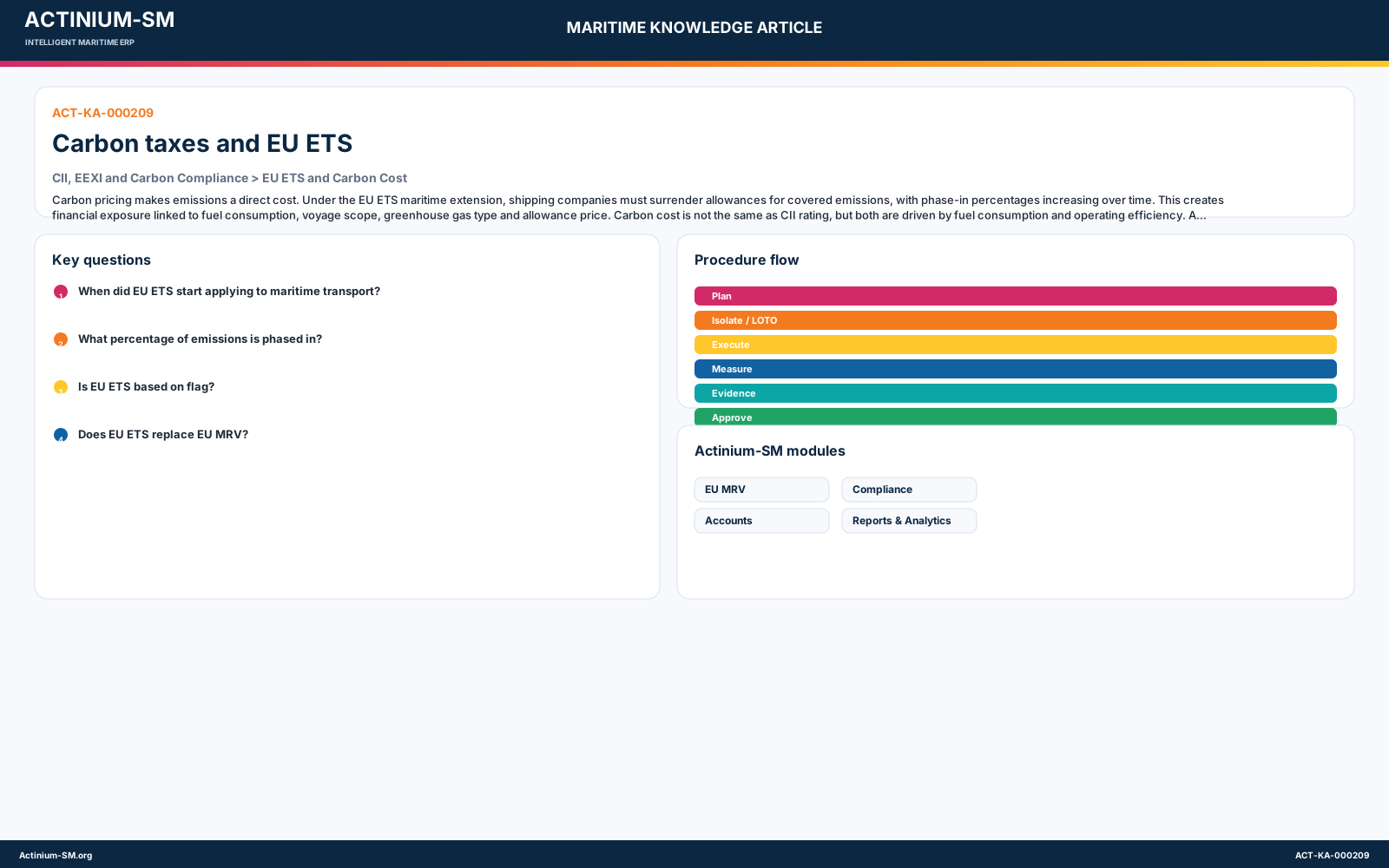
Carbon pricing makes emissions a direct cost. Under the EU ETS maritime extension, shipping companies must surrender allowances for covered emissions, with phase-in percentages increasing over time. This creates financial exposure linked to fuel consumption, voyage scope, greenhouse gas type and allowance price.
Carbon cost is not the same as CII rating, but both are driven by fuel consumption and operating efficiency. A vessel with high fuel consumption can face both weaker CII performance and higher carbon cost.
Difficulty: IntermediateReviewed: 2026-07-24
EU ETS shippingcarbon tax shippingEU allowances maritimeEU MRVFuelEU Maritime
Frequently Asked Questions
When did EU ETS start applying to maritime transport?
EU ETS started applying to maritime transport from the 2024 reporting year, with the first surrender obligation for 2024 emissions due in 2025.
What percentage of emissions is phased in?
European Commission guidance states that 40% of 2024 reported emissions are covered in 2025, 70% of 2025 reported emissions are covered in 2026, and 100% of reported emissions are covered from 2027 onward.
Is EU ETS based on flag?
No. It is route and port based, not flag based. Coverage depends on voyages and port calls under the EU/EEA scope.
Does EU ETS replace EU MRV?
No. EU MRV continues as the monitoring and reporting framework. ETS obligations are based on verified emissions data.
Technical Explanation
EU ETS is a cap-and-trade system. One allowance represents the right to emit one tonne of CO2 equivalent. For shipping, covered emissions are determined from verified data. Coverage includes intra-EU voyages, emissions at berth in EU ports and a share of voyages between EU and non-EU ports according to the applicable rules.
The commercial effect is that every tonne of covered emissions can become a cost exposure. The operational effect is that fuel saving, voyage optimization, clean hull condition and accurate reporting reduce both emissions and financial exposure.
Checklists
• EU MRV monitoring plan available and updated
• EU voyage scope correctly classified
• Berth and port movement emissions captured
• Fuel type and GHG factors mapped
• Allowance exposure calculated
• Charter party cost allocation reviewed
• Verified emissions report submitted on time
Practical Case Studies
A ship performs a voyage from an EU port to a non-EU port. A portion of emissions may be covered under EU ETS rules. If fuel consumption is higher due to speed recovery or waiting, the emissions report and allowance exposure increase.
KPI Monitoring
• EU ETS covered emissions
• Estimated allowance cost
• EU voyage classification accuracy
• Emissions at berth
• MRV verification findings
• Carbon cost per voyage
Related Actinium-SM Modules
• EU MRV data capture
• EU ETS exposure dashboard
• Voyage carbon cost estimate
• Port/berth fuel split
• Annual verification pack
- EU MRV data capture
- EU ETS exposure dashboard
- Voyage carbon cost estimate
- Port/berth fuel split
- Annual verification pack
EU MRVComplianceAccountsReports & Analytics
References
• European Commission FAQ on maritime transport in EU ETS.
• European Commission guidance on MRV maritime reporting and THETIS-MRV.
• IMO CII framework for operational carbon intensity.
Use Actinium-SM to connect emissions reporting with carbon cost visibility.
Turn encyclopedia knowledge into executed jobs, evidence, and audit-ready records.
Last review: 2026-07-24