
ACT-KA-000207 · Rev. 1 · Emissions Reporting
IMO DCS vs EU MRV
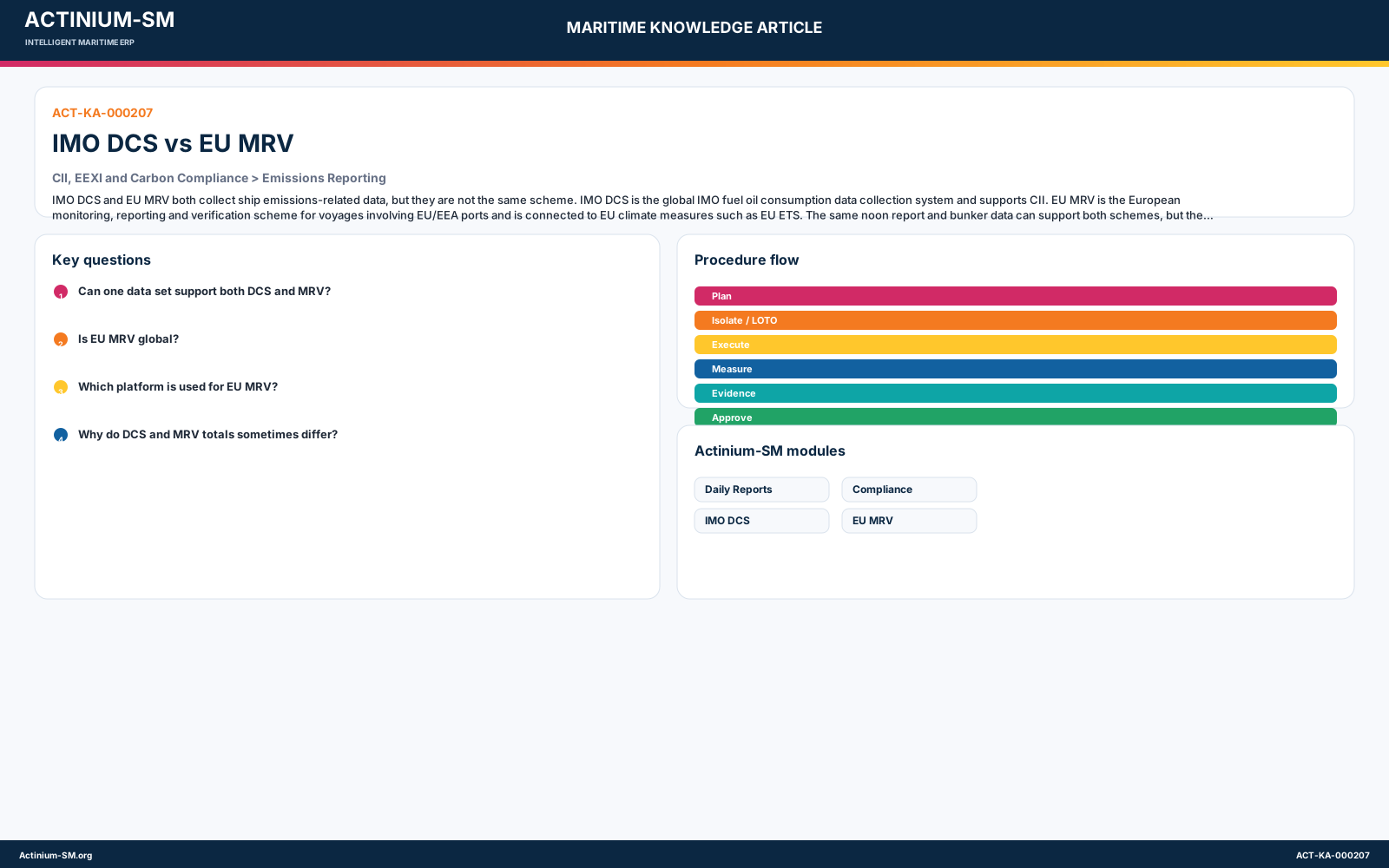
IMO DCS and EU MRV both collect ship emissions-related data, but they are not the same scheme. IMO DCS is the global IMO fuel oil consumption data collection system and supports CII. EU MRV is the European monitoring, reporting and verification scheme for voyages involving EU/EEA ports and is connected to EU climate measures such as EU ETS.
The same noon report and bunker data can support both schemes, but the reporting boundaries, gases, voyage definitions, verification process and submission platforms differ.
Difficulty: IntermediateReviewed: 2026-07-24
IMO DCSEU MRVshipping emissions reportingTHETIS MRVCII data
Frequently Asked Questions
Can one data set support both DCS and MRV?
Yes, if noon reports capture the required fields accurately. The system must still separate IMO DCS logic from EU MRV voyage and port-call logic.
Is EU MRV global?
No. EU MRV is route and port related. It applies to voyages and port calls within the scope of the EU/EEA maritime MRV framework.
Which platform is used for EU MRV?
EU MRV reporting is managed through THETIS-MRV.
Why do DCS and MRV totals sometimes differ?
They may differ because voyage scope, port definitions, gases, ship categories, reporting boundaries and correction rules are not identical.
Technical Explanation
IMO DCS focuses on annual fuel oil consumption and related activity data for ships in scope. It is used in the IMO regulatory framework and supports annual CII.
EU MRV focuses on greenhouse gas emissions for ships calling EU/EEA ports, with route-based coverage. It requires monitoring plans, verified emissions reports and submission through THETIS-MRV.
Both schemes require disciplined data capture:
• Fuel consumption by grade.
• Distance and time.
• Voyage and port call details.
• Emissions factors.
• Evidence trail for corrections.
Checklists
• IMO DCS reporting scope confirmed
• EU MRV scope and voyage coverage confirmed
• Monitoring plan approved where required
• Berth and port movement fuel separated
• Fuel grades mapped consistently
• Correction log maintained
• Verification evidence retained
Practical Case Studies
A vessel sails Singapore to Rotterdam. The voyage may be relevant to EU MRV/ETS because it arrives at an EU/EEA port, but annual IMO DCS still includes the vessel's full reporting-year fuel and activity data according to IMO DCS rules.
KPI Monitoring
• Missing voyage legs
• Missing berth fuel
• EU voyage classification errors
• DCS/MRV fuel variance
• Verification findings
Related Actinium-SM Modules
• IMO DCS annual report support
• EU MRV voyage data capture
• Fuel grade mapping
• Port and berth fuel split
• Verification evidence pack
- IMO DCS annual report support
- EU MRV voyage data capture
- Fuel grade mapping
- Port and berth fuel split
- Verification evidence pack
Daily ReportsComplianceIMO DCSEU MRV
References
• IMO DCS requirements under MARPOL Annex VI.
• European Commission maritime MRV and EU ETS shipping FAQ.
• EMSA THETIS-MRV reporting platform guidance.
Capture one clean noon-report data stream and generate compliant DCS/MRV outputs in Actinium-SM.
Turn encyclopedia knowledge into executed jobs, evidence, and audit-ready records.
Last review: 2026-07-24